
A city easy to misunderstand beautifully
Lisbon is one of Europe's easiest cities to misunderstand beautifully.
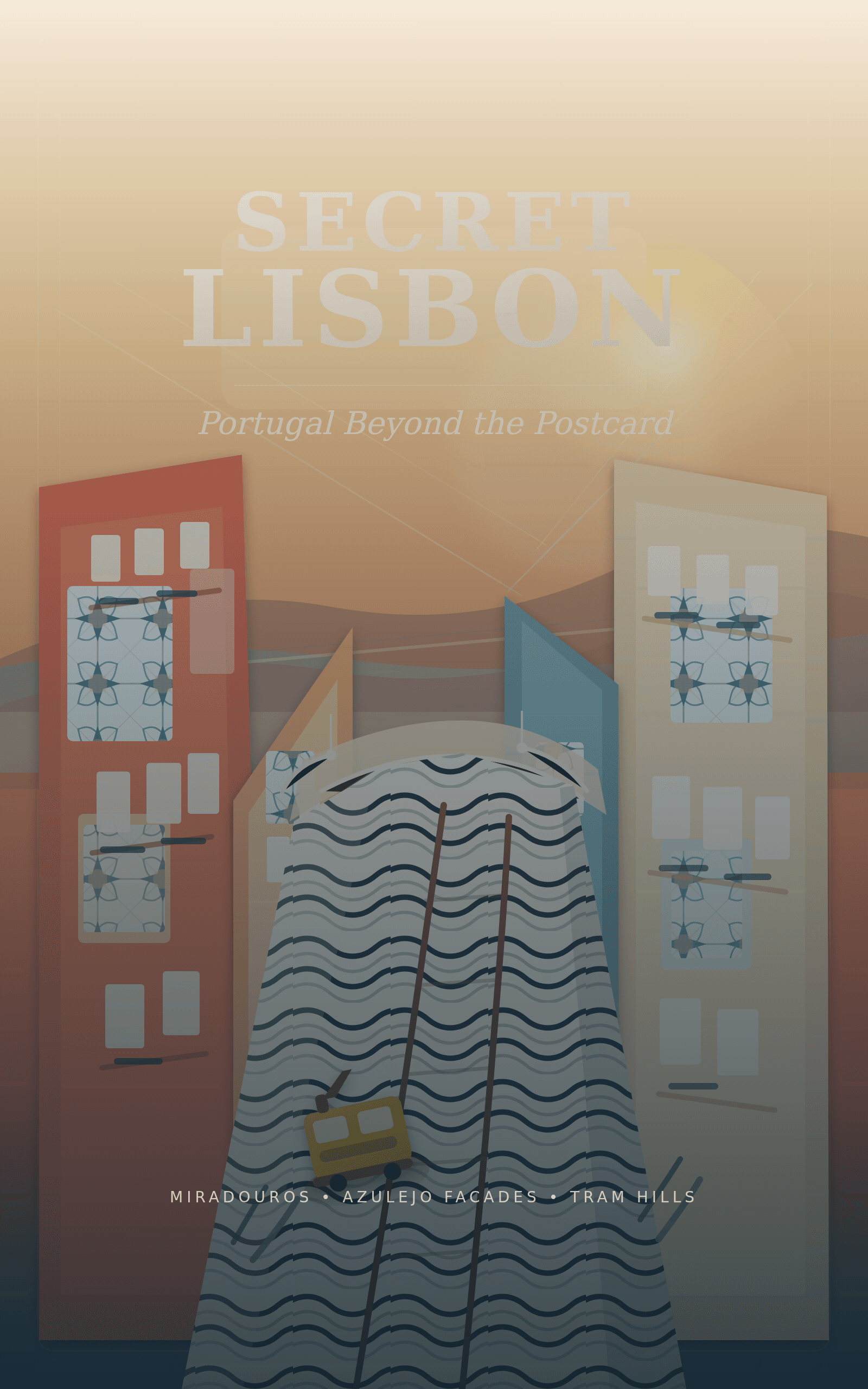
You can have an excellent first trip here and still mostly meet the city in costume. You can eat a pastel de nata in Belém, queue for Tram 28, watch the light slide across Alfama's tiled walls, and come home with every reason to say you loved Lisbon. None of that is fake. The postcard version exists because the city really is that cinematic. But Lisbon also has another life, one that sits just outside the standard angle of view.
It lives in the east where warehouses became bars without losing their rough edges. It lives in lunch-only taverns where the room pauses for grilled fish, not for content creation. It lives on hills that tourists pass below without realizing there is a quiet miradouro above them with the whole city laid out like a hand-drawn map.
Not anti-famous — just a few degrees wider
This guide is for that Lisbon. Not anti-famous Lisbon. Not snobbish Lisbon. Not the performative "secret city" invented by people who confuse obscurity with value. The goal here is simpler and more useful: to help you spend a few days in a way that feels more local, more spacious, and more tuned to the city people actually inhabit.
The best hidden travel is not a treasure hunt for impossible discoveries. It is usually a matter of shifting a few degrees away from the obvious route and letting the city widen.
A city built in layers
Lisbon rewards that shift because it is built in layers. There is the monumental layer of kings, quakes, empire, monasteries, and grand squares. There is the sentimental layer of fado, saudade, yellow trams, and miradouros at sunset. There is the practical layer of neighborhood bakeries, tiled apartment blocks, municipal markets, bus routes, and parish life.
And then there is the transitional layer, especially strong in the east, where old industry, migration, artistic experimentation, and urban reinvention all meet without resolving into a neat story. Most visitors spend almost all their time in the first two layers. The deeper, stranger, more contemporary Lisbon often lives in the last two.
That is why the city feels so different once you stop chasing only named attractions.
Principles for the trip
A few principles will help. Think in hills, not neighborhoods on a map. Two districts can look adjacent and still be separated by a punishing climb. Use the Metro for long jumps and buses for cross-hill movement. Treat famous places as borders — the interesting day often starts just past where most people stop.
Eat lunch seriously. Lisbon's honest food culture often shows itself more clearly at 1 p.m. than at 9 p.m. Do not confuse rough edges with danger or polish with authenticity. Lisbon contains both, often on the same street. Leave gaps in your day. The city rewards lingering more than optimization.
The city of sequences
One of Lisbon's quiet truths is that it is not a city of singular masterpieces so much as a city of sequences. A lane becomes a stair. A stair becomes a terrace. A terrace becomes a churchyard. A churchyard opens to a river view. A view leads you downhill into a bakery. A bakery sends you on with a coffee into a district that looked ordinary on paper and feels unforgettable in person.
This is why rigid checklist travel underperforms here. Lisbon's charm often lies not in the main event but in the transitions.
The city beneath the city is not hidden because it is sealed off. It is hidden because most people are moving too fast to notice when they have already stepped into it.